You Will Do Anything to Avoid Running. Prove Me Wrong.
Jonathan McCune, Condition One Founder
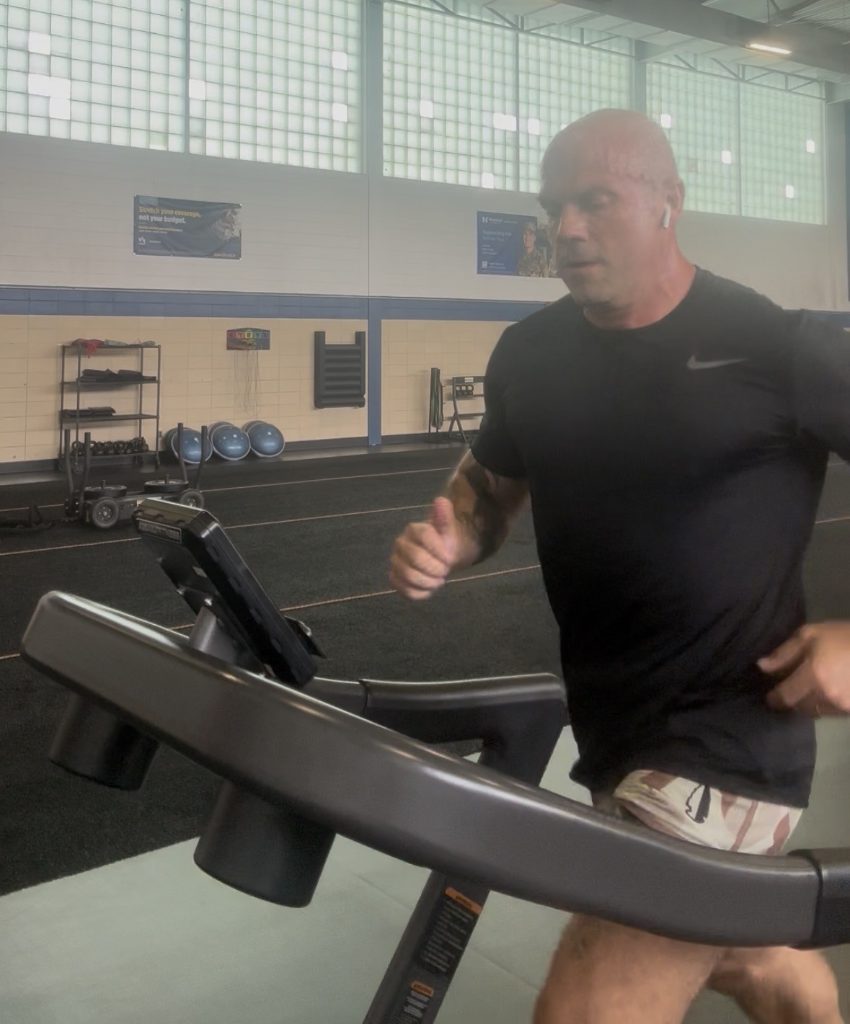
Let's face it. At least most of you proclaim to hate running. In fact, without doing academic research to validate that for at least most of you, I'm willing to bet that if you hate running, you will find a reason to not run. My least favorite is "I don't run on treadmills." Here's the truth, you just don't want to run. If running is a priority (and as a tactical athlete it needs to be a priority), you would find a way. Doesn't matter where. I get it. Running is boring. And it's really boring on a treadmill, but come on...what is more hardening than suffering for an hour in place, inside.
Personally, I absolutely hate, H-A-T-E, running. Know what else I hate? Getting up at 3:30am. But I do it. I own the action. There's no reason that at 5'9, 200 lbs and 46 years old, I should be running a sub 13:00 2-mile or sub 28 min 4 mile.
Why the Treadmill Is Still One of the Most Underrated Tools in Tactical Fitness
In tactical fitness culture, treadmills often get dismissed as "soft" compared to road miles, trail runs, sled pushes, or long rucks. The reality? A treadmill is one of the most versatile conditioning tools available for tactical athletes.
At Condition One, the goal is readiness. Not perfect conditions. Not waiting for motivation. Not hoping the weather cooperates. The treadmill helps remove excuses and creates repeatable opportunities to build endurance, speed, work capacity, and resilience. You need to execute the action.
The Treadmill Removes Barriers
Consistency matters more than almost anything else in conditioning development. Rain. Heat. Lightning. Darkness. Unsafe roads. Limited time. Busy schedule. Family obligations. Shift work. Tactical athletes deal with all of it. A treadmill removes friction.
You can:
- Get quality work done before a shift
- Run intervals safely at night
- Control pacing precisely
- Train during extreme heat or storms
- Execute structured conditioning without relying on location
For military, law enforcement, and first responders, convenience matters because consistency drives adaptation. The athlete who stacks months of uninterrupted training almost always beats the athlete waiting for "perfect" outdoor conditions.
Precision Matters
One of the biggest advantages of treadmill training is pace control. Most athletes think they are running specific paces outdoors. Most are wrong. A treadmill forces accountability.
- Need threshold work at a specific pace? Done.
- Need repeatable VO2 max intervals? Easy.
- Need controlled Zone 2 aerobic work without drifting intensity? Perfect.
This matters because conditioning adaptations are intensity dependent. Tactical athletes often accidentally turn easy days into moderate days and hard days into survival sessions. Treadmills help regulate effort.
VO2 Max Development
VO2 max is essentially your body's ability to utilize oxygen during intense exercise. While tactical athletes shouldn't obsess over lab numbers, improving VO2 max has direct carryover to:
- Faster recovery between efforts
- Better work capacity
- Improved endurance
- Higher repeat sprint ability
- Greater tolerance to high operational output
Treadmills are excellent for VO2 max intervals because pacing stays constant.
Here's a simple VO2 max workout example:
4-6 rounds
- 3 minutes hard
- 2 minutes easy recovery
The treadmill allows the athlete to lock into an output and sustain it instead of constantly adjusting pace outdoors.
Incline running can also dramatically increase cardiovascular demand without requiring maximal sprint speeds. This is especially useful for heavier athletes or athletes managing joint stress.
Overspeed and Speed Development
This is where treadmills become really interesting, and, honestly, where I've made the greatest running gains.
High-speed treadmills can expose athletes to turnover rates faster than they normally achieve outdoors. This is sometimes called overspeed training.
The goal is not reckless sprinting. The goal is teaching the central nervous system (CNS) to move faster.
When applied correctly:
- Stride frequency improves
- Ground contact times can decrease
- Athletes can experience faster mechanics safely and progressively
This type of training has existed in elite sport for years. Tactical athletes can benefit too - especially those needing improved sprint mechanics, acceleration, and movement efficiency. That said, overspeed work should be used intelligently. Workouts need programmed with proper warm up, appropriate duration (see workouts in The Plan), and appropriate volume.
Assault Treadmills vs Traditional Treadmills
Both have value. They simply serve different purposes.
Assault-Style Manual Treadmills are curved, self-powered treadmills that force the athlete to generate movement.
Benefits include:
- Higher posterior chain demand
- Increased work output
- Aggressive conditioning stimulus
- Excellent sprint repeatability
- Strong carryover to acceleration mechanics
Because the athlete controls the belt, these treadmills reward intent. The harder you drive, the faster the machine moves. They are amazing for sprint intervals, power endurance, tactical conditioning circuits, and work capacity (Tempo) training.
Traditional Motorized Treadmills shine in different ways.
Benefits include precision pace control, easier Zone 2 training, controlled incline work, longer aerobic sessions, and repeatable or targeted interval programming. These are ideal for base building, recovery runs, VO2 intervals, threshold development, and structured pacing sessions.
A quality traditional treadmill is one of the best aerobic development tools available when used correctly.
Incline Work Is Underrated
Incline treadmill work deserves its own conversation.
Walking or running at incline:
- Increases cardiovascular demand
- Builds lower-body endurance
- Challenges posture and trunk stability
- Reduces impact forces compared to faster flat running
For tactical athletes, incline work can bridge the gap between running and loaded movement. Heavy incline walking is particularly effective for:
- Ruck preparation
- Aerobic development
- Body composition goals
- Recovery-focused conditioning days
It is brutally effective without the same orthopedic cost as constant high-impact running.
The Mental Side (the most important part)
There is also a psychological benefit to treadmill training. Treadmill work can be monotonous. That is part of its value.
Sitting in discomfort. Holding pace. Staying disciplined. Executing the session exactly as written.
That mindset transfers. Tactical athletes do not always get ideal conditions operationally. Training shouldn't depend on ideal conditions either.
The Bigger Picture
Outdoor running matters. Trails matter. Terrain matters. But dismissing treadmills entirely is shortsighted and immature.
The treadmill is:
- A consistency tool
- A conditioning tool
- A precision tool
- A recovery tool
- A speed development tool
- A readiness tool
At Condition One, the goal is building durable, capable humans prepared for real-world demands. Sometimes that means running through the rain. Sometimes it means putting in disciplined work on a treadmill at 0500.
Both count. Both matter.
Because readiness does not care where the work gets done.
Written by
Jonathan McCune, Condition One Founder