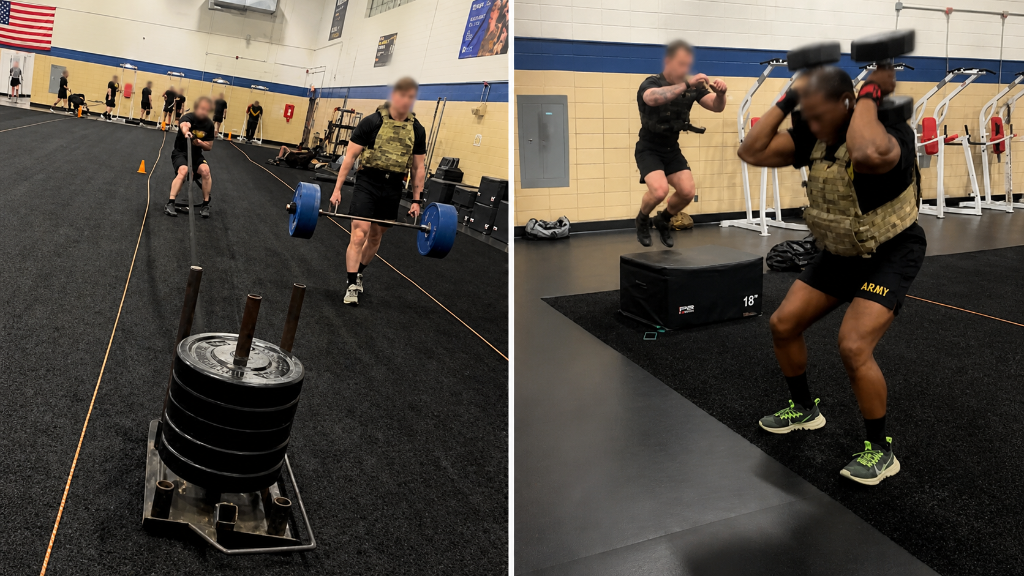
Ready Is An Emotion
Jonathan McCune, Condition One Founder
There's a lie that gets passed around in tactical training circles — especially among athletes searching for a Ranger School training plan or an SFAS training plan. It sounds good, it sells well, and it makes people feel like they're in control.
The lie is this: "Ready" is something you achieve.
A number. A score. A time. A standard.
Readiness isn't a race you prep for. It's a lifestyle. Anyone who has stood on a start line, stepped into a selection environment, or shown up to something that matters knows that's not how it works. Because when that moment comes, nobody cares what your tactical training looked like on paper. Nobody cares what you planned to do.
What matters is what shows up inside you when it's time to move.
Ready Isn't a Metric
You can deadlift 500 lbs. You can run a sub-13 two-mile. You can crush every lift, every interval, every programmed session in your strength and conditioning plan.
And still not be ready.
High-performance environments — especially in the tactical fitness world — don't reward potential. They expose truth. When you're dealing with fatigue, stress, time pressure, and uncertainty, all the extra layers get stripped away.
At places like U.S. Army Ranger School, you don't rise to your best day. You fall back on your most consistent one.
Fatigue strips away performance. Stress removes comfort. Uncertainty kills ego.
What's left is your default.
And that default? That's your level of readiness.
The Feeling Before the Fight
"Ready" isn't calm. It's not comfort. It's not even confidence in the way most people think about it.
It's controlled aggression. It's quiet certainty. It's the willingness to step forward when everything in your body is telling you to slow down.
It's that moment before a long ruck movement under load, before a patrol, before a graded event in Ranger School or SFAS — when your mind locks in and you make a decision:
I don't need perfect. I'm going anyway.
That's not physical. That's not measurable. That's an emotion. And if you've been there, you know exactly what it feels like.
You Don't Fake This
You don't fake readiness in environments like Ranger School or SFAS.
Sleep is limited. Food is controlled. Weather doesn't care. You're expected to lead, perform, and make decisions while your body is breaking down and your mind is trying to catch up.
There's no perfect warm-up. No music. No ideal setup. Just you, your team, and the standard.
This is where the difference shows between athletes who followed a real tactical training program and those who winged it.
The ones who trained for metrics start negotiating. They look for places to coast. They start managing effort instead of executing the mission.
The ones who trained for readiness — who built their strength and conditioning base over months, not weeks — don't negotiate. They act.
Because they didn't just train their bodies — they trained their response.
Training the Emotion
You don't stumble into readiness. You build it — intentionally — through structured tactical fitness programming.
At Condition One, that's the standard. We're not just building strength through weightlifting. We're not just improving conditioning with interval runs. We're training for the moment when the plan breaks down and you're exposed.
That means doing the work when it's inconvenient. Training under fatigue. Training when motivation isn't there. Training when conditions aren't ideal and there's no external pressure forcing you to show up.
It also means owning your decisions. If you skip a run, skip a lift, cut a session short — that's a choice. Something else was more important in that moment. That's fine. But don't pretend it doesn't matter.
Because it does.
Readiness isn't built in perfect environments. It's built in friction.
The Gap Most People Miss
Most programs focus on what to do.
Specifically, the run-of-the-mill $50 PDF Ranger School training plan or SFAS training plan gives you a generic sheet based on what someone thinks will work — not on what's been tested in the field. Lift this. Run that. Follow this plan for 8–12 weeks and you'll be "ready."
But very few tactical training programs focus on who you are when it's time to execute.
That's the gap.
Because when you're 10 miles into a ruck movement, your shoulders are smoked, your legs are locking up, and you're not even halfway done — you're not thinking about your strength and conditioning program.
You're making a decision.
Keep moving — or don't.
That decision is emotional.
Ready is a Choice — Then a Habit
At first, readiness is a choice.
You choose to push. You choose to engage. You choose not to quit when it would be easier to back off.
Over time, that choice becomes a habit. Then it becomes identity.
You're not trying to be ready anymore — you just are.
That's what environments like Ranger School, Ranger Assessment and Selection Program (RASP), SWAT Selection, SFAS, and other high-stakes tactical training events actually reward.
Not talent. Not genetics. Not even a perfectly periodized weightlifting program alone.
They reward people who have made readiness their baseline.
What a Real Tactical Training Plan Looks Like
A legitimate Ranger School training plan or SFAS training plan isn't just a running program. It integrates:
- Strength and conditioning built around compound weightlifting movements — squats, presses, pulls
- Tactical fitness circuits designed to replicate field stress
- Progressive rucking to build load carriage durability
- Run programming across multiple distances and intensities
- Recovery protocols to sustain output over weeks and months
The Condition One program delivers all of this in a structured, periodized system. Not a PDF. A living program that adapts across training phases and prepares athletes for the real demands of Ranger School, SFAS, and beyond.
Condition One Standard
"Ready is an Emotion" isn't a slogan.
It's a standard.
It means you show up prepared, even when it's inconvenient. You execute when conditions aren't ideal. You move forward when doubt creeps in and everything would justify slowing down.
Because the mission doesn't wait. Selection doesn't care. And when the moment comes — whether it's Ranger School, a deployment, or something bigger than yourself — you won't rise to the occasion.
You'll default to who you've trained yourself to be.
Final Word
Ready isn't something you build in 8–12 weeks. That timeline doesn't create readiness — it exposes it.
I've had this conversation more times than I can count. Someone comes to me and says, "I'm heading to U.S. Army Ranger School in a couple months — can you get me ready?" What they're really asking, whether they realize it or not, is: Can I compress a lifestyle into a short-term plan?
And the answer is no.
That doesn't mean preparation doesn't matter. It does. You can sharpen in that time. You can refine weaknesses, clean up inefficiencies, and dial in your weightlifting and conditioning work. But when you step into something like RASP or Ranger School, you're not showing up as the version of yourself you built over the last 8 weeks. You're showing up as the result of your habits — what you've done consistently, long before that date was ever on the calendar.
At Condition One, we don't sell readiness as a timeline. We build it as a baseline. Because when things start to break down — and they will — when you're cold, tired, underfed, and being evaluated under stress, there's no switch you flip. There's no hidden reserve you suddenly discover.
You don't rise to the occasion. You fall back on your default.
Ready is an Emotion means this: when everything around you degrades, your standards don't.
So the question isn't, "Will you be ready when the time comes?"
The question is:
Who are you when it's time to move?
Written by
Jonathan McCune, Condition One Founder